Why I Make Beginners Open Their Eyes Underwater 👀💦
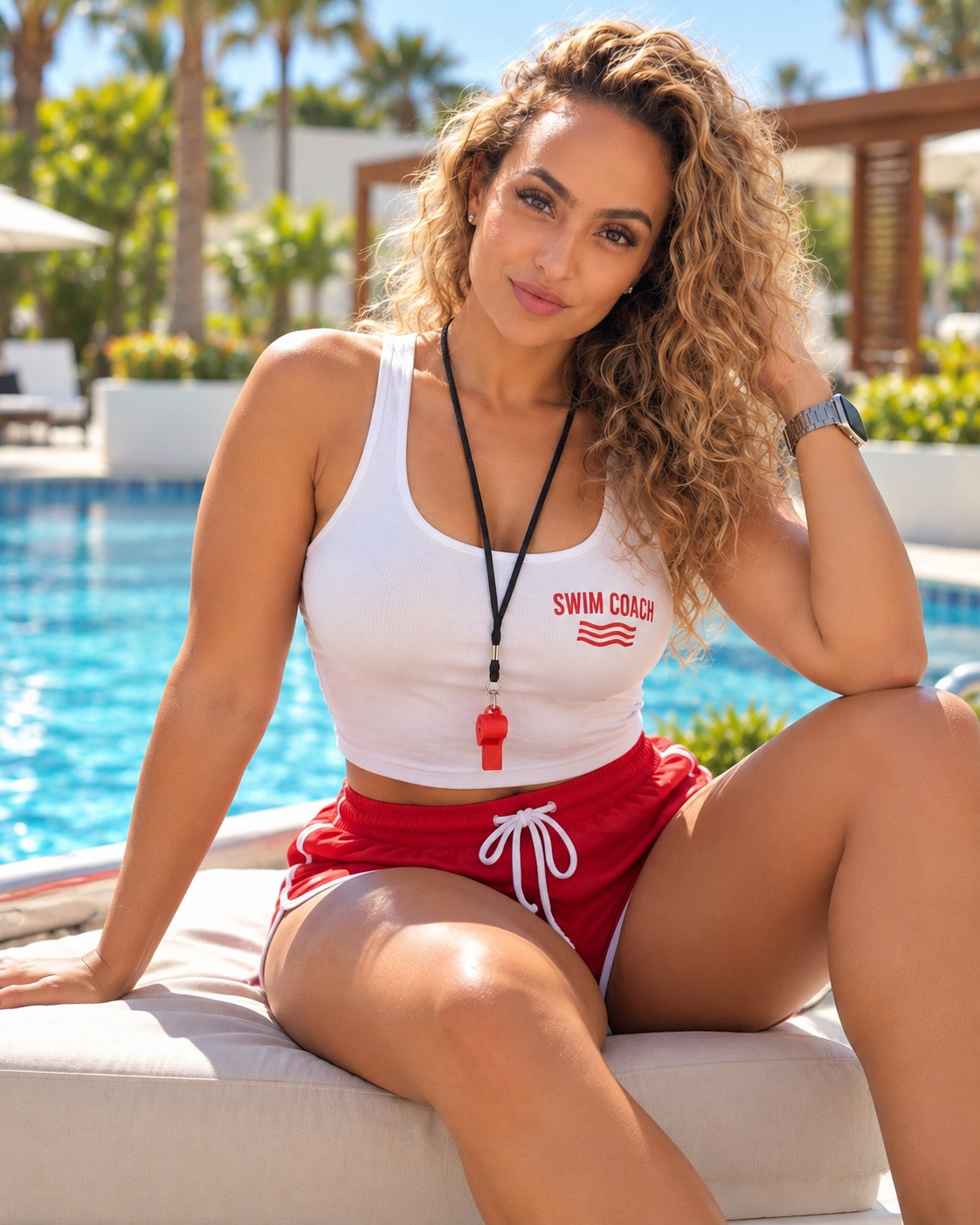
If your goggles fall off in the middle of a swim, I do not want that to be the moment you discover you cannot stand to have water near your eyes. That is why I practice short, comfortable moments with eyes open underwater. It is one small part of being able to think and move in the pool instead of immediately panicking.
To be clear, I am not asking anyone to keep their eyes open for an entire lap. Chlorine and salt can irritate eyes, and a swimmer with sensitive eyes should talk with an appropriate professional. We work on a brief skill, rinse afterward if needed, and use goggles when they help. The goal is confidence without making equipment feel like the only thing keeping you safe.
First, Your Face Has to Feel Okay in the Water
I start where the swimmer actually is. For one person that means getting their chin wet. For another it is a relaxed mouth in the water and a few bubbles. We build to nose, forehead, and then a quick look. A tiny success you can repeat is more useful than one dramatic dunk that makes you avoid the pool next week.
In a supervised lesson, the swimmer can hold the wall in shallow water, dip just enough to look at a toy or tile, then come right back up. No breath holding contests. No forcing an upset child underwater. We pause and reset whenever the body starts bracing.
Your Eyes Help You Find Your Way
When your face is down, a pool line or a visible target can help you orient yourself. Beginners often lift their whole head every few seconds to check where they are. That pulls the body out of position, interrupts the breath, and makes the swim feel harder than it needs to.
I call the pool line your free GPS. Once you can take a quick look underwater, you can follow a reference while keeping your body long. That does not mean staring at the line and forgetting everything else. You still need to know where the wall is, who is around you, and when to stop.
Goggles Are a Tool, Not the Plan
I use goggles for comfort and longer swimming, but my standard beginner sequence starts without them. We build face confidence and brief comfortable orientation first, then introduce equipment when it fits the swimmer and the task. An individual need can change the setup.
At home, keep practice small and supervised. Try a comfortable face dip at the wall, look for one visible object, come up, and tell me what you saw. If the eyes sting, stop and rinse. If you are nervous, work with an instructor instead of attempting a new underwater skill alone.
A Small Progression That Actually Sticks
Start at a wall where you can stand and put a hand down whenever you need it. Look at the surface of the water, then let your mouth touch it while you blow a few bubbles. When that feels ordinary, dip your nose and face for a moment. Only then try a quick glance at a tile, your hand, or a bright object just below the surface. Come up before you feel desperate for air. The win is being able to repeat that calm glance, not staying under longer than the person beside you.
I ask swimmers what they noticed afterward. Was the object closer or farther than they expected? Could they tell which way the wall was? Did they start exhaling before they went under? Those answers tell me whether the skill is becoming useful, rather than just something a swimmer endured once. If the answer is “I have no idea, I panicked,” we make the next repetition easier.
If You Are Teaching a Child
A child gets a choice about the next step. I can demonstrate, offer a toy at the surface, and celebrate a tiny look. I cannot build trust by surprising them with a dunk. A child who happily puts their chin in today may need to repeat exactly that tomorrow. That is still practice. Familiarity grows through many small, successful experiences, especially when the child knows how to return to the wall and stand up.
Keep the adult close enough to help immediately and keep the activity within the child's current ability. Do not make a game of holding breath, diving for objects in deep water, or competing to stay under. If eye irritation or fear takes over, stop the exercise. We can build water comfort another day. A calm swimmer learns more than a cornered one.
If You Are an Adult Beginner
Adults sometimes apologize for needing this step. Please do not. If water on your face makes your breathing race, a quick underwater look is a real skill, even if you are standing in the shallow end. Put your feet under you, hold the wall, exhale softly, look at one fixed point, and stand back up. Notice what you can control. As the sequence becomes predictable, you can practice a slightly longer look or use the pool line to guide a short supported glide.
If you usually swim with goggles, short appropriate repetitions without them can help you handle a splash or shifted strap. Practice with your instructor in a controlled setting. You are learning a response, not proving that you can tolerate discomfort.
What This Skill Does and Does Not Do
Opening your eyes briefly can help you spot a nearby wall or follow a visible pool line. It does not replace learning to breathe, float, recover, move to an exit, or ask for help. Pool visibility varies, and no single drill makes someone safe around water. Children and new swimmers still need attentive supervision, barriers where appropriate, and a plan for getting out.
I build this into lessons because it connects to the bigger picture. The swimmer who can put their face in, exhale, look, and return to the wall has a sequence to practice. Later, that sequence can support a calmer glide and a more controlled swim. We keep the steps small enough that confidence is earned in the water, one repeatable decision at a time.
A quick look has a practical purpose
We begin with a target you already know is there: a nearby tile, pool line, or your instructor's hand. Stay in a controlled, supervised setting where recovery is simple. A quick comfortable look gives your brain information; staring longer does not earn bonus points.
Once face dips feel calm, the next job is to look, recognize the target, and come back up. Later, that same information helps you follow a short path while kicking. I do not introduce a deep retrieval task to a swimmer who is still learning to tolerate a splash.
If your eyes hurt or become irritated, stop. My normal starting point without goggles can be adapted. Confidence means being able to choose a useful response, including asking for help or using suitable equipment. It does not mean overriding discomfort.
Do I have to keep my eyes open for an entire swim?
No. This beginner skill is brief orientation in an appropriate coached setting. Goggles can be useful for longer swimming. If you have sensitive eyes or an eye condition, discuss an appropriate approach with your clinician and instructor.
The Point
This is not a toughness test. It is one more way to make the pool feel less mysterious. I want you to be able to take in information, make a decision, and find your way back to a safe place, even when the goggles are not cooperating. 💦
In Los Angeles, I teach private lessons for kids and adults. You can explore lessons at coachrasha.com. Swimming skills add a layer of protection, but no swimmer is drown proof: children and inexperienced swimmers still need close, attentive supervision.
Keep Building Your Swimming Skills
Related reading: Why I Do Not Start Beginners With Goggles 👀.
Want help with your next step? Explore private swim lessons in Los Angeles with Coach Rasha in Winnetka, Westchester, or at an appropriate client pool.
Practice within your ability with appropriate close supervision. Stop and recover if you feel distressed, dizzy, or uncomfortable. A blog, toy, or teaching tool does not replace qualified instruction or water safety supervision.
Comments